
Welding is often imagined as a purely industrial skill — sparks flying in a factory, steel beams joining to form bridges and buildings. Yet, for many creators, welding transcends the world of engineering and enters the realm of art. It is both a science and a creative language, a medium through which imagination is shaped in molten steel. Across workshops and studios worldwide, artists are redefining what metal can express — and how its strength can convey beauty.
Among those merging these worlds is Gallo Welding and Fabrication, an Atlanta-based studio where craftsmanship, creativity, and structure converge. Here, every weld is not just a bond — it’s a brushstroke in steel.
I. A Brief History of Metal as Art
Metal has fascinated humankind for millennia. Early civilizations shaped bronze, iron, and gold into tools, ornaments, and sacred symbols long before the invention of modern welding. But as technology evolved, so did artistic expression.
In the early 20th century, artists like Julio González and David Smith pioneered the use of welded metal as a sculptural medium. They saw potential in the heat, texture, and rigidity of steel — transforming it from an industrial material into an artistic one. Smith famously described his welding torch as a “pencil of fire,” capable of drawing in three dimensions.
Since then, metal art has become a distinct genre — a balance of creativity, danger, and precision. Contemporary metal artists now use tools once reserved for construction sites to build delicate, expressive forms that fill galleries and public spaces alike.
II. The Science Behind the Beauty
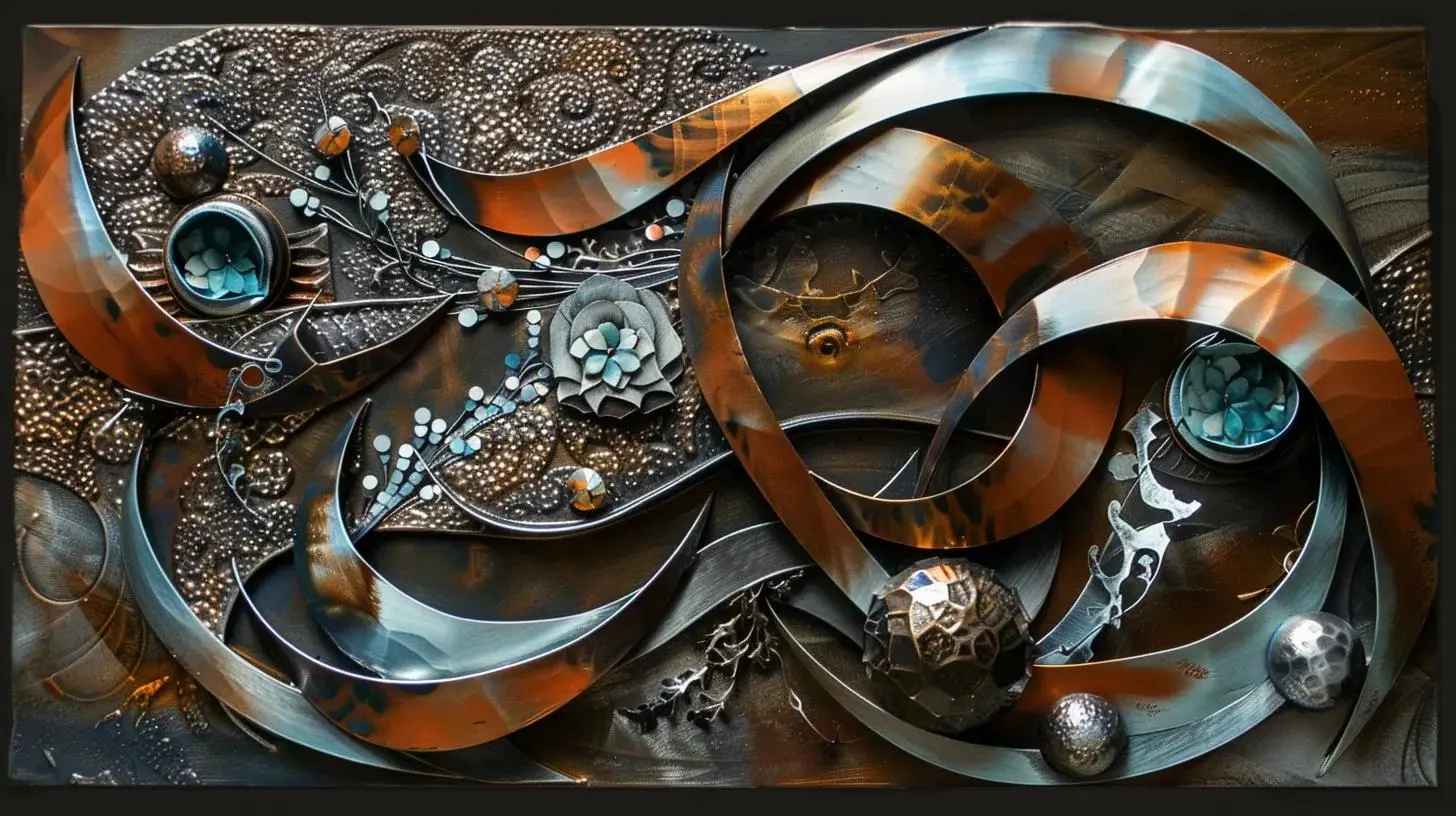
What makes welded sculpture so compelling is its fusion of science and art. The same principles that hold skyscrapers together are the ones that allow an artist to create a seamless curve or a balanced form.
Different metals — steel, aluminum, copper, and bronze — each have unique properties that influence how they behave under heat. For example:
- MIG welding (Metal Inert Gas) allows artists to work quickly and cleanly on large pieces.
- TIG welding (Tungsten Inert Gas) gives more precision, ideal for detailed or fine art projects.
- Oxy-acetylene welding provides a painterly quality, letting artists “draw” with flame.
The control of temperature, feed rate, and filler material is as deliberate as a painter’s choice of brushstroke. Even imperfections — a rough seam, a splatter of melted flux — can become intentional textures that tell the story of the material’s transformation.
III. From Workshop to Gallery
For decades, welding and fabrication were confined to the industrial sector. Today, they are seen as integral parts of contemporary art and design. Modern sculptors and designers use welding to create large-scale installations, architectural features, and functional art — blending engineering with aesthetics.
In Atlanta, for example, public metal sculptures adorn parks, plazas, and event spaces, symbolizing the city’s blend of history and innovation. Many of these works share a similar ethos: craftsmanship meeting creativity. It’s a vision also reflected in the custom structures built by Gallo Welding and Fabrication, whose work bridges the gap between fine art and functionality. Their creations — from elegant wedding arches to event backdrops — show how metalwork can elevate spaces into something timeless.
IV. The Modern Metal Artist
Today’s metal artist is a hybrid of multiple disciplines — engineer, designer, sculptor, and sometimes even architect. They must understand metallurgy, physics, and structural integrity while maintaining an eye for proportion and emotion.
New technologies have further expanded the creative toolbox:
- CNC plasma cutting allows for intricate patterns once impossible by hand.
- 3D modeling software lets artists design digitally before cutting their first piece of steel.
- Powder coating and patina processes introduce vibrant color and protection to finished works.
Yet even with all this technology, the human touch remains central. The rhythm of welding, the sound of grinding, and the tactile feedback of metal cooling under hand — these are experiences that no machine can replicate. The artistry lies not just in the finished sculpture but in the dance between person and material.
V. The Emotional Weight of Metal
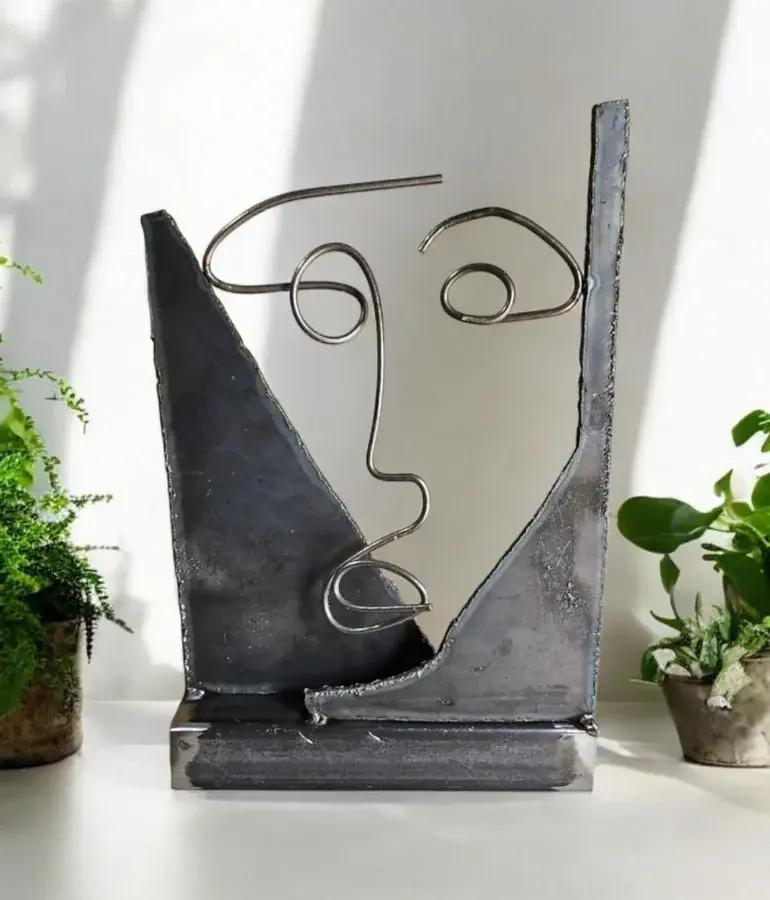
Metal has a physical and emotional gravity that few materials can match. It endures. It ages gracefully. A steel sculpture can survive for centuries, acquiring texture and patina over time. In that endurance, metal art mirrors the permanence of ideas and emotions — love, memory, struggle, resilience.
In weddings, for instance, a welded arch or frame is more than décor; it’s a symbol of structure and unity. At events, custom installations made from metal command presence, capturing the viewer’s attention and transforming space through reflection and geometry.
Artists understand this duality — the coldness of steel softened by the warmth of human intent. Every welded joint tells a story of both force and finesse.
VI. The Language of Light and Texture
Metal art interacts uniquely with light. The way a polished surface gleams under sunlight or a brushed texture scatters illumination gives each piece a life of its own. This interplay is deliberate: artists design surfaces to catch or diffuse light, enhancing depth and emotion.
Texture is another layer of communication. Smooth welds suggest elegance and restraint, while rough seams and visible joints embrace honesty — a celebration of process. This tactile storytelling draws viewers closer, inviting them to feel the energy behind each spark.
VII. The Future of Welded Art
As the boundaries between disciplines dissolve, welding will continue to bridge the gap between utility and imagination. Artists are now collaborating with architects, interior designers, and event planners to integrate custom metalwork into everyday environments — railings that double as art, lighting fixtures that echo sculpture, and outdoor installations that reshape public space.
Sustainability will also shape the future of the craft. Recycled metals and eco-friendly fabrication techniques are becoming more prevalent, transforming what was once industrial waste into works of lasting beauty.
VIII. Conclusion: The Spark That Becomes Sculpture
Welding is more than a trade — it’s a dialogue between form and fire. It’s a process that transforms something rigid and unyielding into something expressive and enduring. Every weld marks a moment of creativity meeting control, artistry meeting science.
Through studios like Gallo Welding and Fabrication, the legacy of metal art continues to evolve — one spark, one sculpture, one inspired creation at a time.
In the hands of a true artist, steel stops being steel. It becomes story, emotion, and art that stands the test of time.